
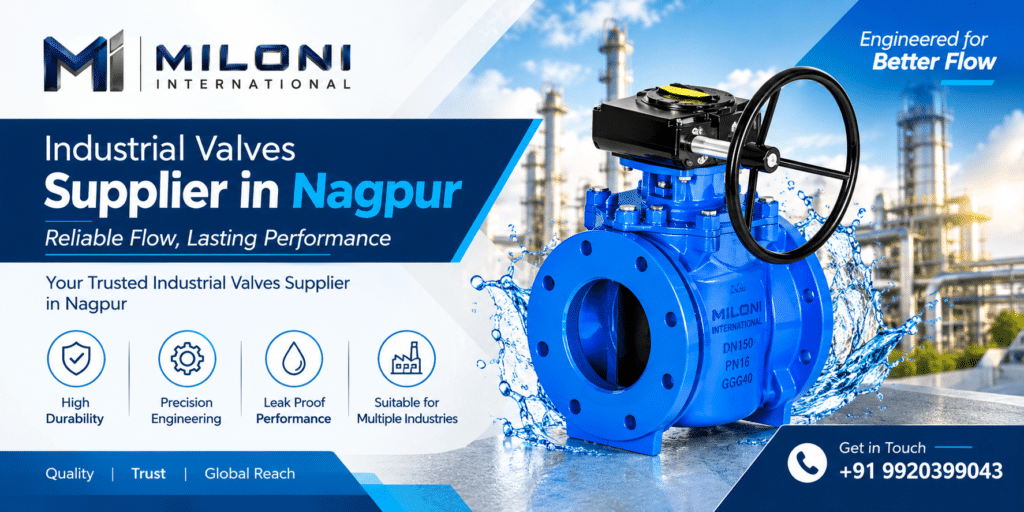
Industrial Valves Supplier in Nagpur
Introduction
Established in 2009 in Mumbai, Miloni International has grown into a trusted name in the supply of high-quality industrial products. With a strong commitment to precision, durability, and customer satisfaction, we serve a wide range of industries including construction, infrastructure, oil & gas, manufacturing, and engineering sectors across India.
Industrial valves play an important role in controlling the flow, pressure, and direction of liquids, gases, steam, and other fluids in industrial systems. They are widely used in manufacturing plants, chemical industries, water treatment facilities, oil and gas operations, power plants, and many other industrial applications. Choosing the right valve helps businesses maintain operational safety, improve efficiency, and reduce maintenance costs. We are the best Industrial Valves Manufacturer.
Miloni International aims to serve industrial buyers looking for dependable industrial valve solutions. By focusing on product suitability, quality requirements, and customer needs, the company can support businesses in finding appropriate flow control products for their operations.
What Are Industrial Valves
Industrial valves are mechanical devices used to start, stop, regulate, or redirect the flow of fluids through pipelines and equipment. They are essential components in industrial piping systems because they help operators control fluid movement according to process requirements.
Different industries require different types of valves depending on the working environment. For example, a water treatment plant may need valves designed for water flow, while a chemical processing unit may require valves made from materials compatible with corrosive fluids. We are the best Industrial Valves Exporter.
When selecting industrial valves, buyers should consider the operating pressure, temperature range, valve material, size, end connection, and required flow characteristics. Selecting the correct valve helps improve system performance and supports safe, reliable operation.
Types of Industrial Valves
1. Gate Valves
Gate valves are primarily used to start or stop fluid flow. They operate by lifting or lowering a gate inside the valve body. These valves are suitable for applications that require a fully open or fully closed flow path.
- Water supply and distribution systems
- Oil and gas pipelines
- Industrial processing plants
- Power generation facilities
- Water treatment plants
2. Globe Valves
Globe valves are designed to regulate and control the flow rate of fluids. Their internal construction allows accurate throttling, making them useful where flow adjustment is important.
- Steam pipelines
- Cooling water systems
- Chemical processing units
- Fuel supply systems
- Industrial pressure control applications
3. Ball Valves
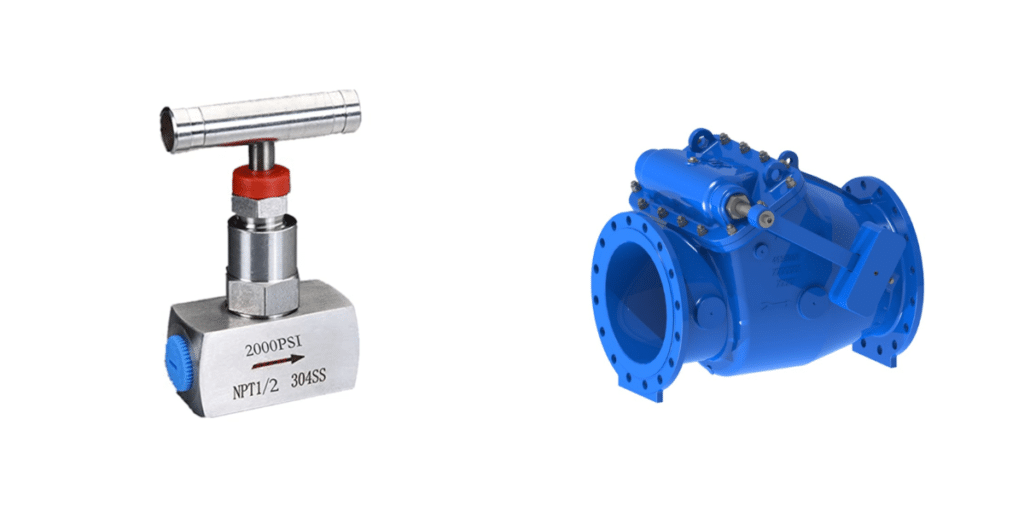
Ball valves use a rotating ball with a bore to control fluid flow. A quarter-turn operation allows quick opening and closing. They are widely used because of their simple operation, reliable shut-off, and ease of maintenance.
- Oil and gas industries
- Water supply pipelines
- Chemical plants
- Compressed air systems
- Manufacturing facilities
4. Butterfly Valves
Butterfly valves use a rotating disc to regulate or isolate flow. Their compact design and relatively low weight make them suitable for large-diameter pipelines and installations with limited space.
- HVAC systems
- Water treatment plants
- Food and beverage processing
- Industrial cooling systems
- Wastewater management
5. Check Valves
Check valves allow fluid to flow in one direction and help prevent reverse flow. They operate automatically in response to flow conditions, protecting pumps, pipelines, and other equipment from potential backflow damage.
- Pump discharge lines
- Water distribution networks
- Industrial pipelines
- Boiler systems
- Chemical processing plants
6. Pressure Relief and Safety Valves
Pressure relief and safety valves protect equipment against excessive pressure. They open when the pressure reaches a specified set point, helping prevent damage to vessels, boilers, and piping systems.
- Boilers and steam systems
- Pressure vessels
- Compressed gas systems
- Chemical manufacturing plants
- Industrial processing equipment
Applications of Industrial Valves
1. Manufacturing Industries
Manufacturing plants use industrial valves to control the movement of water, compressed air, oil, steam, and other process fluids. Valves help operators regulate flow, isolate equipment during maintenance, and manage production processes.
- Controlling liquid flow in production lines.
- Regulating pressure in industrial pipelines.
- Isolating machinery during repair and maintenance.
- Managing cooling water and lubrication systems.
- Improving operational safety and process consistency.
2. Water Treatment and Wastewater Management
Water treatment plants depend on industrial valves for the distribution, filtration, treatment, and discharge of water. These valves help control water movement throughout the treatment process and support efficient plant operation.
- Water supply and distribution networks.
- Wastewater treatment facilities.
- Filtration and purification systems.
- Pumping stations and storage tanks.
- Industrial water recycling systems.
3. Chemical and Pharmaceutical Industries
Chemical and pharmaceutical facilities require valves that can safely handle different liquids, gases, chemicals, and process fluids. Material compatibility is especially important when selecting valves for corrosive or sensitive applications.
- Controlling chemical transfer between storage tanks.
- Regulating the flow of process liquids.
- Isolating chemical processing equipment.
- Managing cleaning and flushing systems.
- Supporting controlled fluid handling in production lines.
4. Power Plants and Energy Industries
Power generation facilities use industrial valves in steam, cooling water, fuel handling, and auxiliary systems. Valves help manage fluid movement under different pressure and temperature conditions.
- Steam distribution and isolation.
- Boiler feedwater systems.
- Cooling water circulation.
- Fuel supply and transfer lines.
- Pressure control and equipment protection.
5. Oil and Gas Industries
Oil and gas operations require valves for the controlled transportation, storage, and processing of petroleum products and gases. Correct valve selection is essential for dependable operation and leak prevention.
- Oil and gas pipeline systems.
- Fuel storage and transfer facilities.
- Gas distribution networks.
- Pumping and processing equipment.
- Isolation of pipelines and process units.
6. Food and Beverage Processing
Food and beverage manufacturers use valves to control water, ingredients, cleaning solutions, and other process fluids. Applications involving direct food contact may require hygienic valve designs and materials suitable for the product being processed.
- Liquid ingredient transfer.
- Water circulation and supply.
- Beverage processing lines.
- Cleaning-in-place systems.
- Flow control in production equipment.
7. HVAC and Building Infrastructure
Heating, ventilation, and air-conditioning systems use industrial valves to regulate water flow and manage heating and cooling circuits in commercial buildings, factories, hospitals, and industrial facilities.
- Chilled water circulation.
- Hot water distribution.
- Cooling tower systems.
- Pump isolation and maintenance.
- Flow balancing in HVAC pipelines.
8. Agriculture and Irrigation Systems
Agricultural facilities and irrigation projects use valves to control the distribution of water to fields, storage tanks, and pumping systems. Industrial valves are also used in agricultural processing plants and water supply infrastructure.
- Irrigation pipeline control.
- Pumping and water distribution.
- Fertigation system flow management.
- Reservoir and tank isolation.
- Water management in agricultural facilities.
9. Cement, Steel, and Heavy Engineering Industries
Heavy industries operate equipment that requires reliable flow control for water, lubricants, compressed air, steam, and other process media. Industrial valves help maintain the operation of essential machinery and utility systems
- Cooling water pipelines.
- Hydraulic and lubrication systems.
- Compressed air distribution.
- Industrial utility lines.
- Process water and equipment isolation.
Benefits of Industrial Valves
1. Reliable Flow Control
One of the main benefits of industrial valves is their ability to control the flow of fluids accurately. Different industrial processes require different flow rates, and suitable valves help regulate these requirements.
A dependable Industrial Valves Supplier in Nagpur can provide valve options for isolating pipelines, regulating flow, preventing reverse flow, and managing pressure. Proper flow control helps maintain stable production processes and reduces the risk of operational interruptions.
2. Improved Industrial Safety
Safety is essential in industries that handle high-pressure liquids, steam, chemicals, and gases. High-quality industrial valves help control fluid movement and isolate sections of a pipeline when required.
Depending on the application, valves such as safety valves, pressure relief valves, check valves, and shut-off valves can help reduce the risk of overpressure, backflow, and accidental fluid release. Selecting the correct valve material, pressure rating, and design is important for maintaining safe industrial operations.
3. Long-Term Durability
Industrial valves are often exposed to demanding operating conditions, including high temperatures, pressure variations, vibration, and corrosive fluids. Durable valves manufactured from suitable materials can withstand these conditions when correctly selected and maintained.
A professional supplier can help buyers choose materials such as stainless steel, carbon steel, cast iron, brass, or other compatible alloys according to the application. Durable industrial valves can help reduce premature replacement, minimise downtime, and improve the reliability of pipeline systems.
4. Reduced Maintenance Costs
Unexpected valve failure can interrupt production and increase repair expenses. Leakage, corrosion, worn seals, and damaged internal components may lead to frequent maintenance requirements.
Working with a reliable Industrial Valves Supplier in Nagpur helps businesses identify valves that match their operating conditions. Choosing suitable products and following recommended inspection schedules can reduce unnecessary repairs and extend service life.
5. Better Operational Efficiency
Efficient fluid management is essential for maintaining consistent industrial production. Correctly selected industrial valves help control flow, support stable pressure conditions, and reduce avoidable losses caused by leakage or unsuitable valve operation.
For example, a properly sized valve in a water distribution system can support effective flow management, while a suitable control valve in a manufacturing process can help maintain the required operating conditions. An experienced supplier can assist with product selection based on flow requirements, pressure drop, temperature, and system compatibility.
6. Better Product Compatibility
Every pipeline system has different requirements. Valve compatibility depends on factors such as pipe diameter, connection type, pressure class, temperature range, fluid characteristics, and installation conditions.
An established Industrial Valves Supplier in Nagpur can help buyers identify products with suitable specifications and connections. This reduces the likelihood of installation difficulties, improper sealing, and performance issues. Before purchasing, businesses should confirm technical specifications and applicable standards to ensure the selected valve is suitable for the intended system.
7. Support for Industrial Procurement
Industrial buyers often need dependable product availability, clear technical information, and timely communication. A professional supplier can simplify procurement by helping customers identify suitable products and compare available specifications.
For maintenance teams, contractors, manufacturers, and plant operators, sourcing valves from a dependable supplier can make purchasing more organised and reduce delays associated with incorrect product selection. Businesses should evaluate suppliers based on product quality, technical knowledge, documentation, delivery commitments, and after-sales support.
8. Reduced Leakage and Product Loss
Leakage in industrial pipelines can waste water, oil, chemicals, compressed fluids, or other valuable materials. It may also create safety concerns and increase operating expenses. Industrial valves with appropriate sealing arrangements and material compatibility can help minimise leakage when installed and maintained correctly.
The selection process should consider the fluid being handled, operating pressure, temperature, frequency of operation, and required shut-off performance. Proper installation and periodic inspection are equally important for maintaining effective sealing.
9. Cost-Effective Industrial Operations
The purchase price is only one part of the total cost of an industrial valve. Businesses must also consider installation, maintenance, energy losses, replacement frequency, and the potential cost of production downtime.
A reliable Industrial Valves Supplier in Nagpur can help buyers compare available options according to technical suitability, durability, and budget. The most economical choice is the valve that meets the application requirements without compromising safety or performance.
Why Choose Miloni International
Miloni International is a name to consider when searching for industrial valve solutions for business and industrial applications. Selecting products that match the actual working conditions is an important step toward dependable flow control.
Miloni International can position its offering around the needs of industrial buyers who value suitable product selection, clear communication, and reliable sourcing.
Reasons industrial buyers may consider Miloni International include:
- Industrial application focus: Support in identifying valve solutions according to the intended use.
- Product selection guidance: Assistance in evaluating valve type, material, size, and operating requirements.
- Quality-conscious sourcing: Attention to the specifications and quality requirements relevant to the application.
- Business-oriented service: Clear communication regarding product enquiries and purchasing requirements.
- Support for industrial buyers: A supplier relationship focused on understanding customer requirements and identifying suitable products.
For accurate product recommendations, buyers should share their required valve type, quantity, size, operating pressure, temperature, fluid medium, and preferred material with Miloni International. Confirm product availability, certifications, and delivery details directly with the company before placing an order.
Frequently Asked Questions (FAQs)
1. What are industrial valves used for?
Industrial valves are used to start, stop, regulate, or redirect the flow of liquids, gases, steam, and other fluids in industrial systems.
2. Which types of industrial valves are commonly used?
Common types include gate valves, ball valves, butterfly valves, globe valves, check valves, and pressure control valves. The correct type depends on the application.
3. How do I select the right industrial valve?
Consider the fluid type, operating pressure, temperature, flow requirements, valve material, connection size, and installation conditions.
4. Why is valve material important?
The valve material must be compatible with the fluid and operating environment. Correct material selection helps reduce corrosion, leakage, and premature component failure.
5. Where are industrial valves used?
They are used in water treatment, chemical processing, manufacturing, power generation, oil and gas, pharmaceutical production, and many other industries.
6. How can I find an Industrial Valves Supplier in Nagpur?
Compare suppliers based on product suitability, technical documentation, quality requirements, customer communication, and product availability. Provide your application details to receive a more relevant recommendation.
7. Why consider Miloni International for industrial valves?
Miloni International can be contacted for industrial valve enquiries and product-selection discussions. Confirm the required valve type, specifications, availability, and other purchasing details directly with the company.
8. How can industrial valve maintenance reduce downtime?
Regular inspection, timely replacement of worn components, correct operation, and following manufacturer maintenance instructions can help identify faults early and reduce unexpected interruptions.
Conclusion
Industrial valves are essential components in modern industrial piping and fluid-handling systems. From gate valves and ball valves to butterfly valves, globe valves, and check valves, each type serves a specific purpose. Selecting the correct product helps businesses manage flow, support safe operations, and maintain efficient industrial processes. We are the best Industrial Valves Wholesaler.
Miloni International is a business worth contacting to explore appropriate industrial product selections if you’re looking for an Industrial Valves Supplier in Nagpur. Clearly describing your needs is the first step in choosing the best solution, regardless of whether you need valves for manufacturing, water treatment, utility pipelines, or other industrial applications.